
Show Cooking e Cottura al Tavolo:
A Technical Guide to Lava Stone vs. Soapstone for Fine Dining
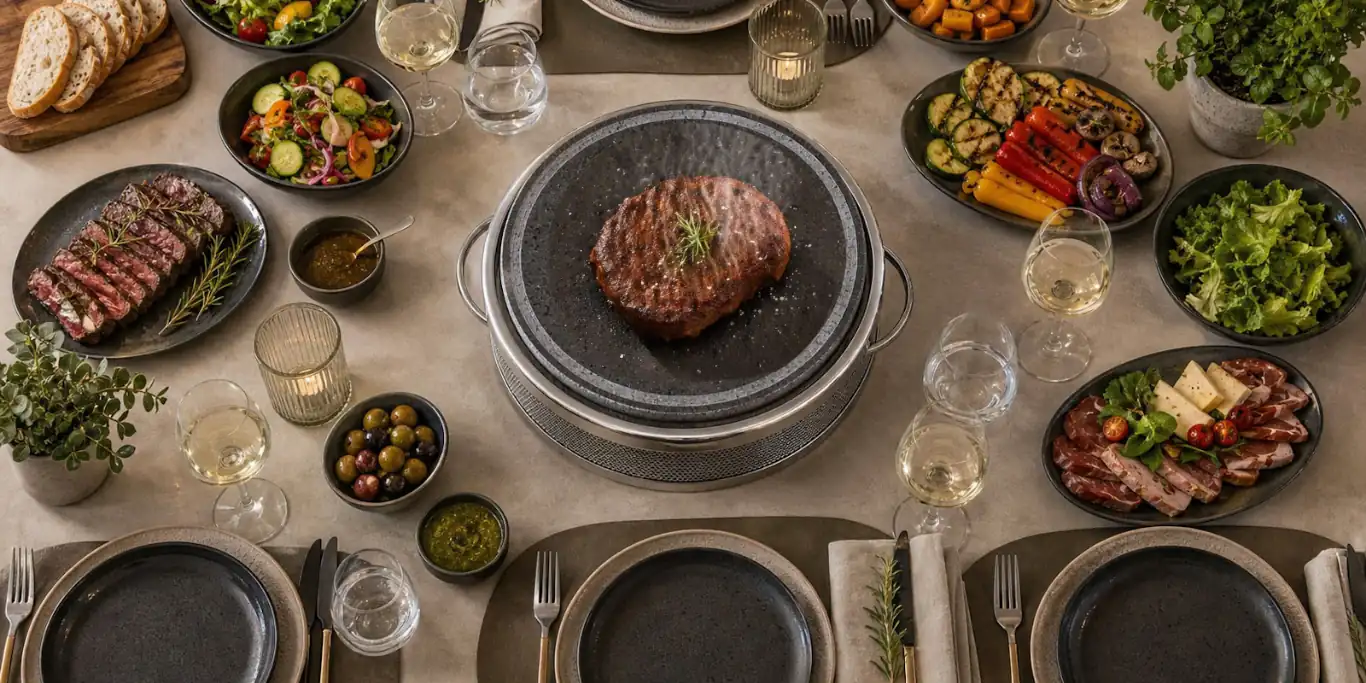
In the contemporary dining landscape, the line between the kitchen and the dining room has become incredibly thin. Bringing the cooking process directly to the guest’s table is no longer just a choreographic choice, but a precise strategic vision: a celebration of premium ingredients that optimizes kitchen workflow and transforms an ordinary dinner into an unforgettable experience.
However, managing high temperatures just inches away from the customer requires a deep understanding of materials and the use of flawless professional equipment. For those looking to implement this exclusive service in their venue, the first strategic decision concerns the radiant heart of the experience: is it better to use Lava Stone or Soapstone? Let’s dive into the thermal analysis, operational advantages for avant-garde menus, and maintenance protocols required to guarantee both performance and safety.
Two Geological Natures for Two Cooking Styles
Although the visual impact may seem similar, the mineral composition of these two surfaces results in radically different thermal behavior. Choosing one over the other means, in fact, shaping the very identity of your menu.
Lava Stone: Magmatic Power for Premium Cuts
Volcanic basalt is an extremely hard, refractory material characterized by a native structural micro-porosity.
• Thermal properties: It boasts extraordinary resistance to thermal shock. It tolerates extremely high direct temperatures without undergoing superficial micro-fractures.
• Ideal Menu Application: It is ideal for achieving perfect searing and the Maillard reaction on large cuts of meat, ribeyes, and premium cuts. It allows an instant crust to form on the surface of the meat, trapping the juices inside and preserving succulence.
Soapstone: The Gentleness and Consistency of Steatite
Composed mainly of talc and magnesium, soapstone is a denser, more compact rock that is velvety to the touch.
• Thermal properties: Its thermal conductivity is constant, with a heat retention capacity approximately 50% higher than common metals. It releases the accumulated energy slowly, evenly, and gradually.
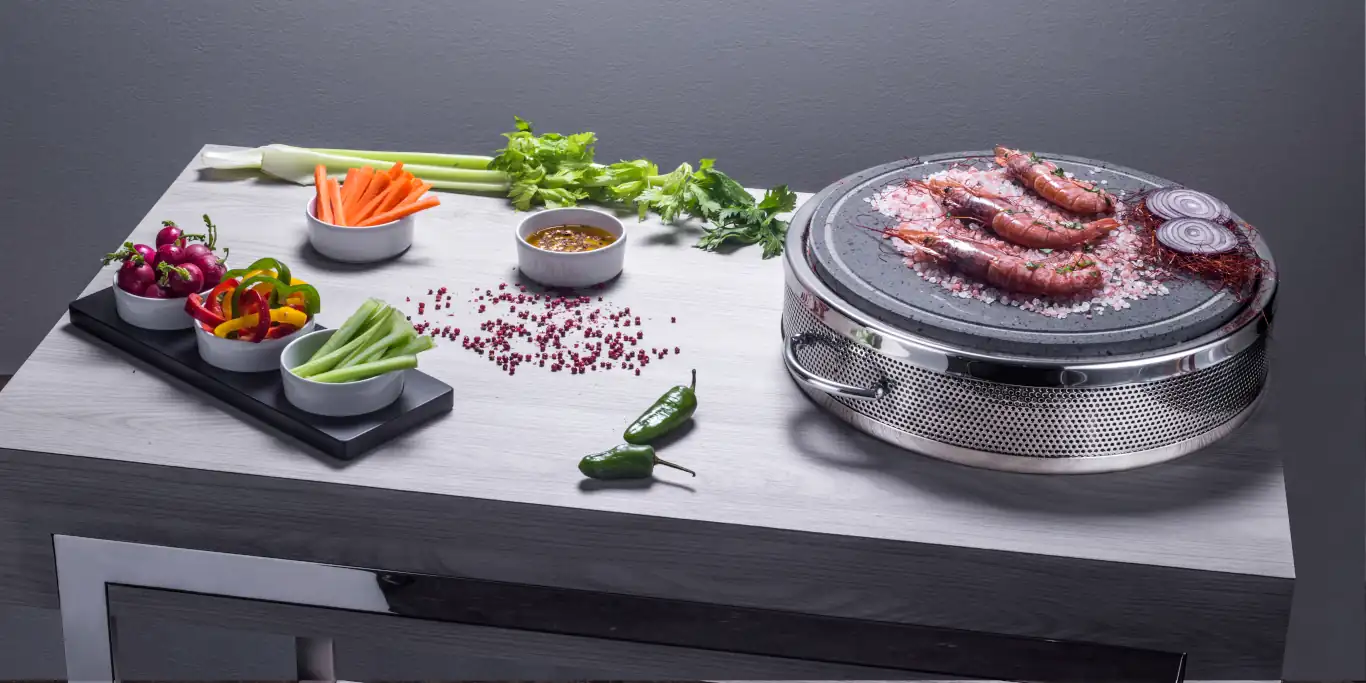
• Ideal Menu Application: It excels in delicate or prolonged cooking. It is ideal for enhancing noble fish fillets, shellfish, and gourmet vegetables, or for keeping dishes warm during tasting menus, thanks to a surface that is naturally non-stick.
Layout and Accessories: How to Manage Dining Room Space
Every dining concept requires a presentation that is consistent with its identity. The integration of these materials must therefore be based on modular solutions capable of interacting with table space and service style.
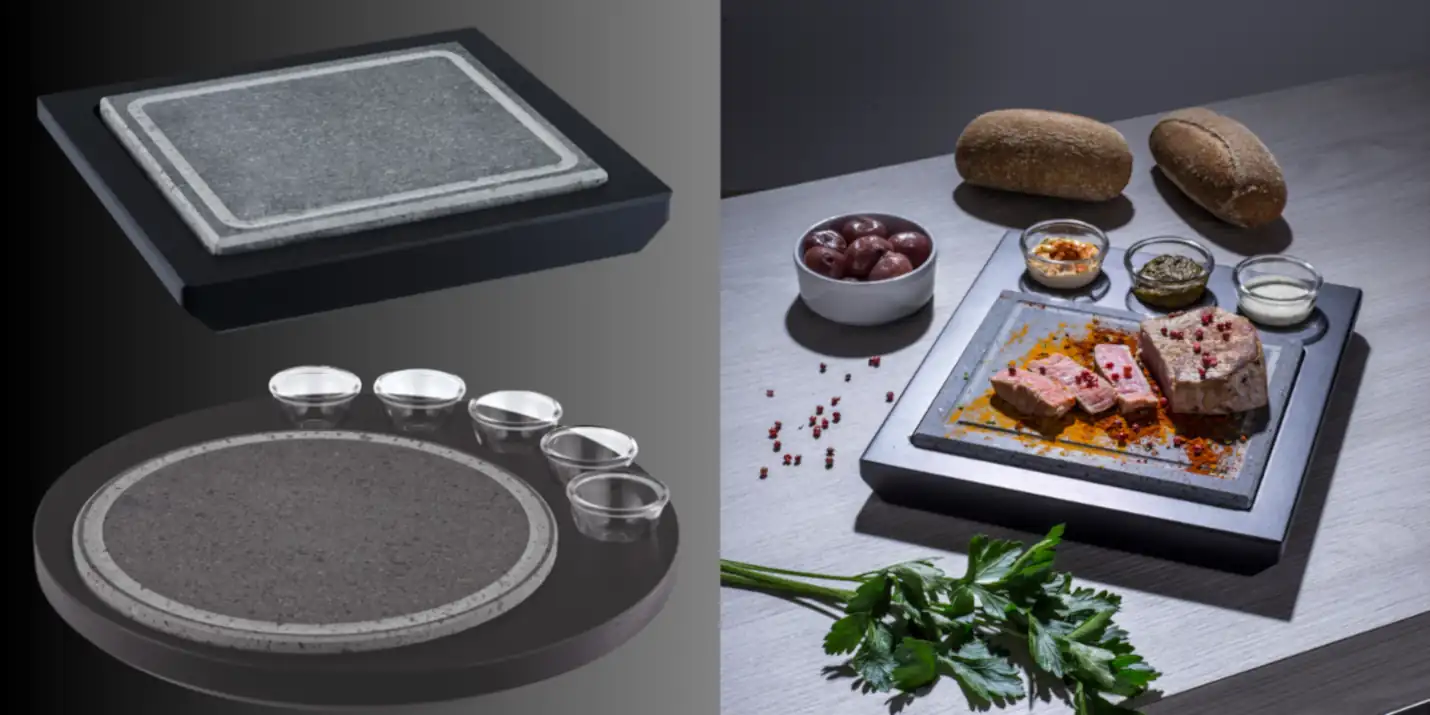
Dynamic and Exclusive Single-Portions
Individual solutions with noble wood bases, available in elegant round or square geometries, are perfect for an agile service, giving each guest full control over their dining experience. Models featuring integrated sauce bowls allow the stone, condiments, and side dishes to be served in a single coordinated element, optimizing table space with a clean, essential design.
Sharing and Convivial Tables
For sharing dishes in the center of the room or for tables of honor, oversize formats configured as centerpieces with a stainless steel base offer a sumptuous scenic presence, maintaining the ideal temperature for the entire duration of the service.
Maintenance Protocol: Preserving Your Investment Over Time
Since these are natural and living materials, their longevity within an intensive HoReCa workflow depends on proper handling by the brigade.
The Conditioning Phase (First-Time Use)
Before debuting in the dining room, the stone must be washed exclusively with water and salt, dried perfectly, and massaged with a thin layer of vegetable oil. Subsequently, it is gradually heated in the oven up to 180°C for about two hours. This process stabilizes the structure and saturates its pores, preparing it for actual service.
Daily Cleaning at the End of Service
• Natural Cooling: Never pour cold water on a hot stone. The thermal shock could crack the soapstone or compromise the integrity of the lava stone.
• Zero Chemical Detergents: Since these are porous surfaces, traditional soaps would leave chemical residues that alter the flavor of the food in subsequent services. Professional cleaning is carried out by scraping off residues with a steel spatula and scrubbing with an abrasive sponge dipped in water and vinegar (or lemon).
• Care of the Bases: Wooden bases must never be placed in the dishwasher; instead, they should be sanitized with a damp cloth and products suitable for food-contact surfaces.
Stainless Steel: Engineering and Safety in the Dining Room
Bringing a stone that exceeds 250°C to the table requires meticulous engineering to protect the safety of both staff and guests. The wood used for our bases is high-density to thermally insulate the table, while the compartments are milled to the millimeter to prevent any dangerous shifting of the stone during cutting.
When sizes increase for large centerpieces, the choice of structural material becomes crucial. The integration of high-quality stainless steel bases guarantees the mechanical rigidity necessary to support the specific weight of the stones, while offering absolute resistance to corrosion, maximum ease of sanitization, and a modern aesthetic that blends perfectly with fine dining environments.
Ultimately, the choice of material and the perfect format depends exclusively on the architecture of your menu and the identity of your restaurant. Whether it is an individual service on a wooden base or a grand central presentation in steel, the goal remains the same: to turn the dining room into the stage for a memorable experience.
At Deagostini Inox, we develop solutions for professional catering by combining the metallurgical precision of our steel with the selection of the best natural materials for dining room service.
Ready to integrate show cooking into your restaurant? Contact us today to discover all the options for diameter, shape, and accessories available in our catalog and to request a personalized study for a tailored offer that meets your needs.

