
Professional hot plates and cooking surfaces:
how to choose the right solution for your HoReCa service
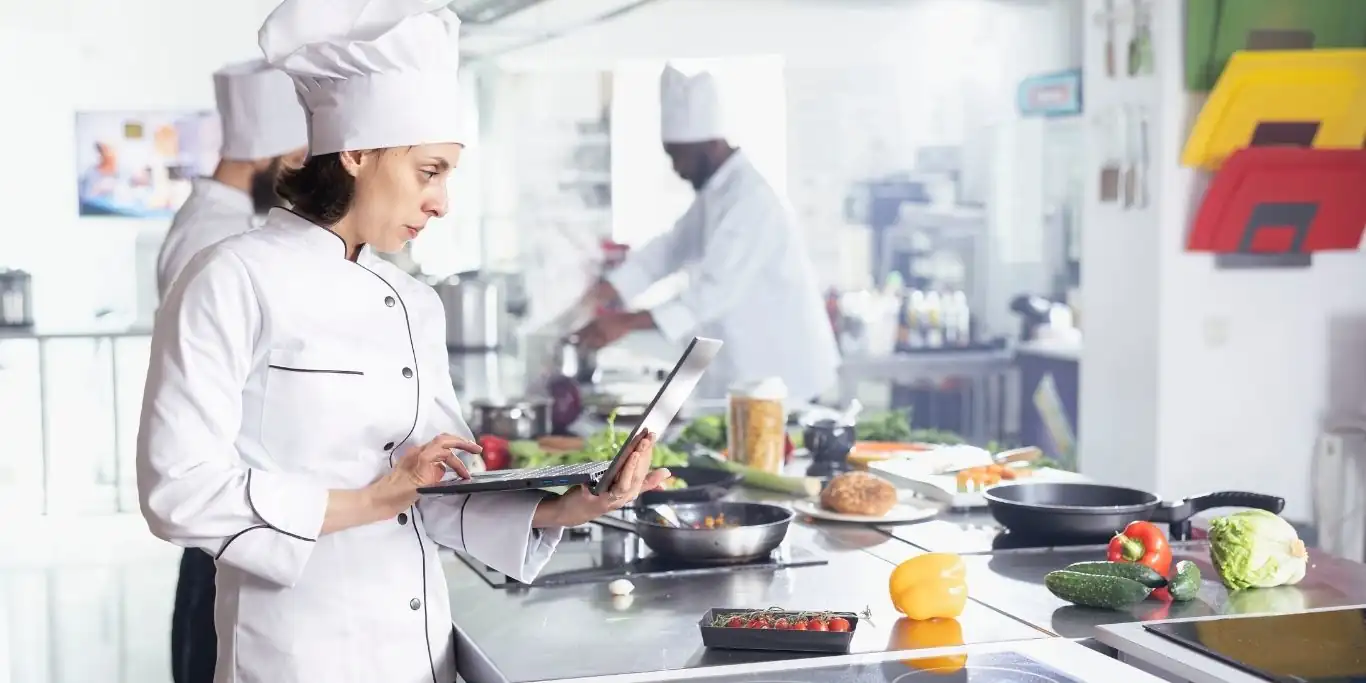
The right temperature is a strategic choice
In the daily work of a restaurant, hotel, or catering service, the control of temperature is not just an operational detail, but a fundamental strategic choice.
Keeping dishes at the correct serving temperature, ensuring operational continuity, and preserving the quality of preparations directly affects the guest experience and the efficiency of the team.
For this reason, choosing professional hot plates and cooking surfaces requires attention, expertise, and alignment with the service model of the establishment.
What is a professional hot plate and when is it essential
A professional hot plate is designed to keep food at the ideal serving temperature, preventing temperature fluctuations and preserving taste, texture, and overall quality.
It is particularly recommended for:
- busy restaurants
- breakfast and lunch buffets
- staff cafeterias and catering
- pizzerias and gourmet food shops
Its value lies in its capacity to maintain continuous service, minimize idle time, and enhance the organization of both the kitchen and service line.
Types and materials of professional hot plates
Professional hot plates differ in material and technology, each with specific features designed to meet different operational needs.
Made of stainless steel or glass-ceramic, they operate using electric heating elements or infrared lamps.
They allow precise temperature control and are ideal for buffets and continuous service lines.
Materials compared: stainless steel vs. glass-ceramic
Stainless steel
- durable and long-lasting
- hygienic and easy to clean
- perfect for high-traffic environments
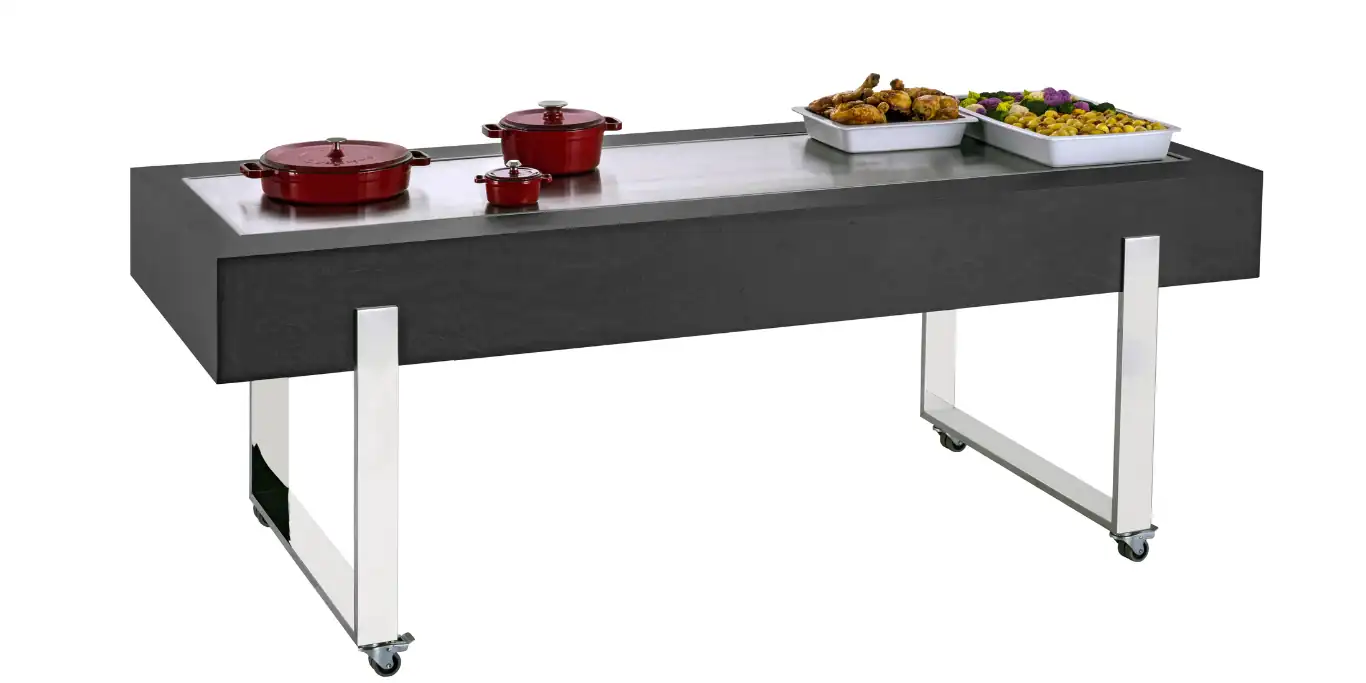
Glass-ceramic
- quick and uniform heating
- clean and modern design
- requires more careful cleaning
There is no one-size-fits-all solution: the choice depends on the operational context and the style of service.
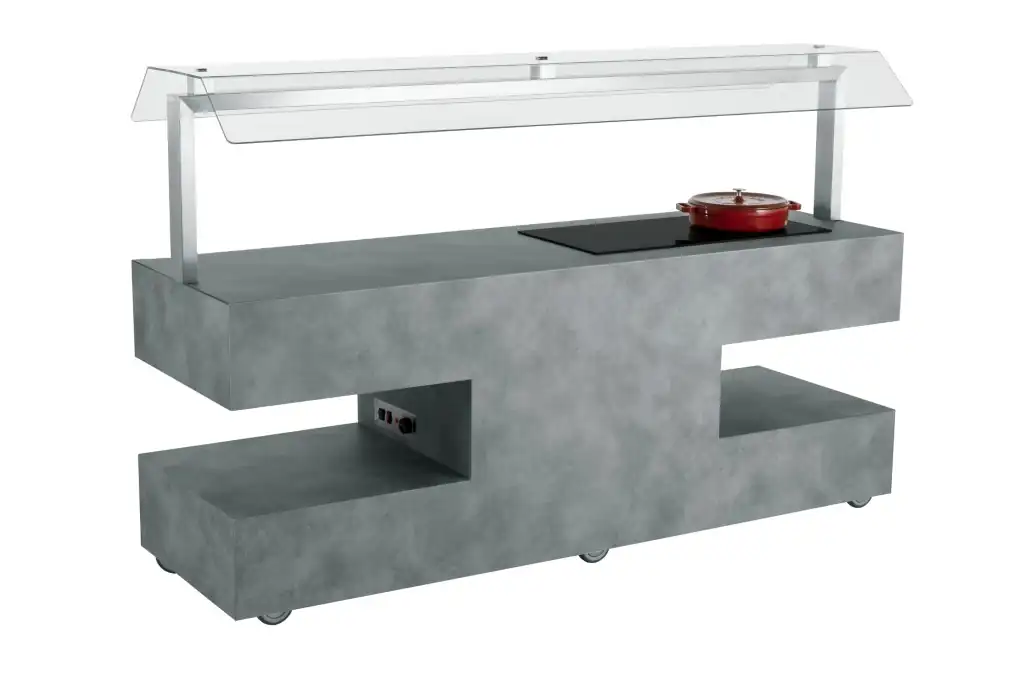
From keeping warm to cooking: induction comes into play
When the hot plate is also used for active cooking, induction technology represents a strategic choice.
Advantages of professional induction hot plates:
- They heat the cookware directly through electromagnetic fields
- very fast response times
- high energy efficiency (over 90%)
- enhanced safety and temperature control
They require compatible cookware, but in high-traffic kitchens, induction is now one of the most valued solutions in terms of performance, sustainability, and safety.
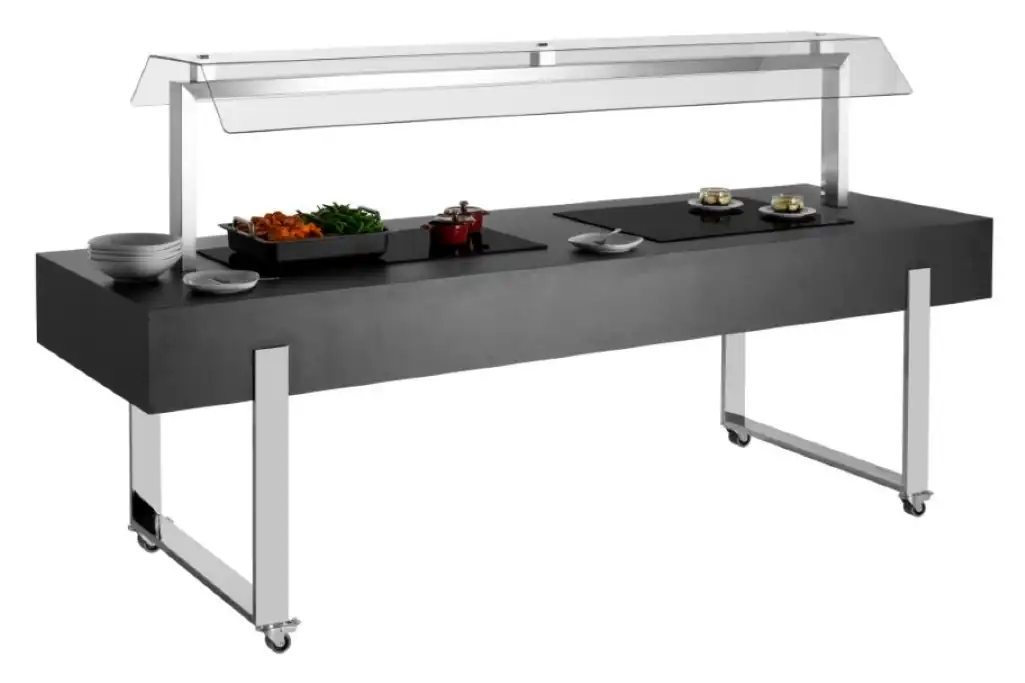
How to choose the most suitable solution
For a Chef, F&B Manager, or Restaurant Manager, the choice is not only technical. Key factors to consider include:
- available space
- service capacity
- type of dishes
- operational pace
- energy and maintenance costs
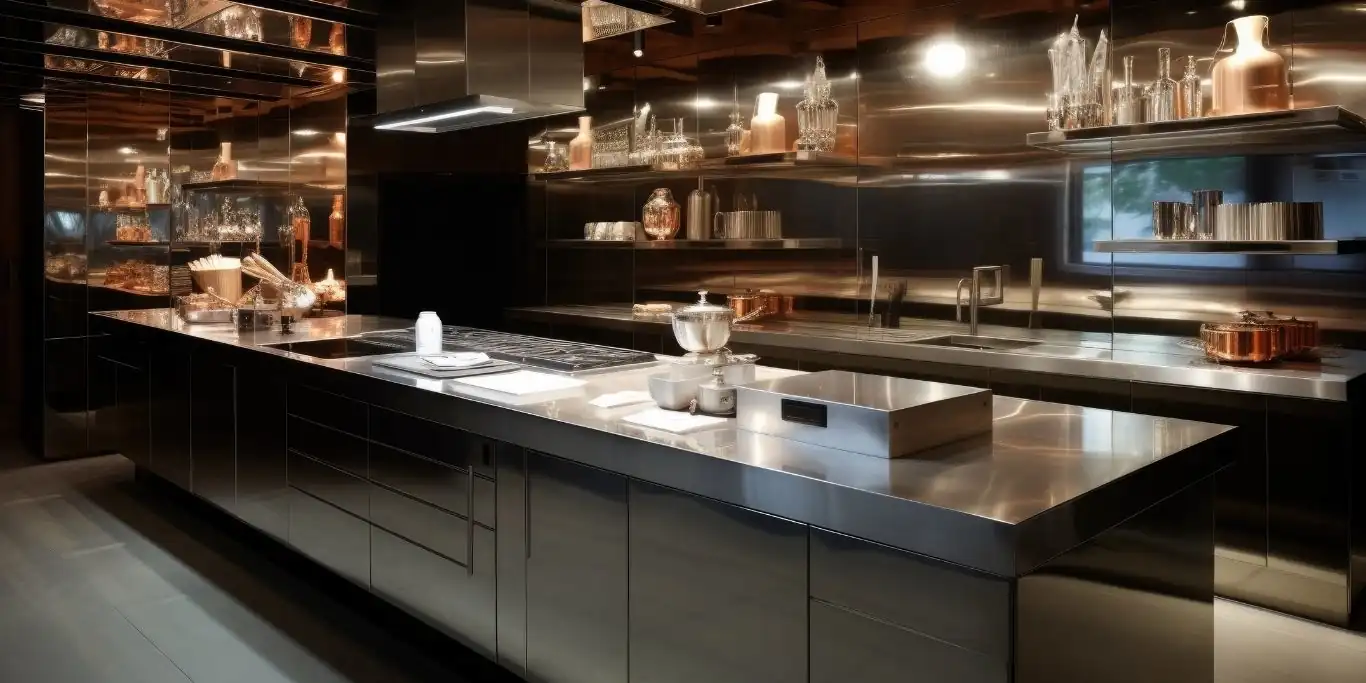
The correct question is not “which is the best hot plate?” but “which hot plate is most suitable for my operational model?”
A choice that enhances service
Choosing a professional hot plate means investing in operational efficiency, safety, and the quality perceived by the customer. Materials, technology, and design work together to support those working in the kitchen and dining area, contributing to a consistent, smooth, and high-level HoReCa experience.
Maintenance and hygiene
Whatever technology is chosen, proper maintenance is essential to ensure consistent performance over time:
- daily cleaning
- use of non-abrasive cleaners
- following the manufacturer’s instructions
Induction hobs, due to their surface not overheating directly, are generally easier to keep clean, while stainless steel and glass-ceramic require different care but are easily manageable in a professional setting.
Discover our catalog and get inspired
Explore Deagostini Inox solutions for professional kitchens: custom fixtures, work surfaces, technologies, and applications designed to meet the operational needs of every project.

